
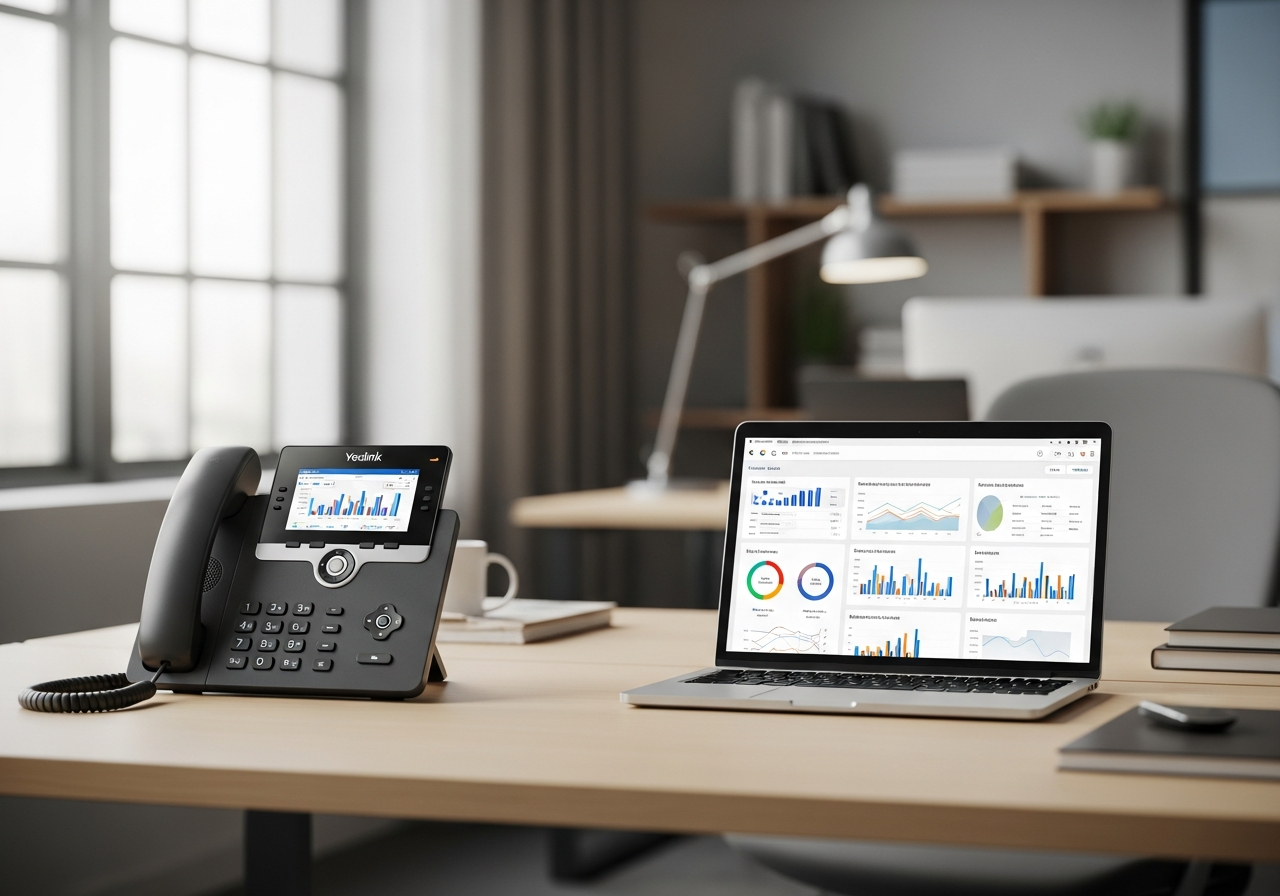
A ten-person office with six desk phones is one of the most common setups we are asked to price, and one of the easiest to price wrong. The headcount says ten. The hardware says six. Neither number, on its own, tells a provider what you need.
This article is about one question: how do you turn the people and phones in your office into a quote request that every provider has to answer the same way? It does not repeat the general cost-bucket comparison in our first-year cost test. Use that article once you have quotes. Use this one before you ask for them.
Start with people and how they use the phone, not with devices
Ten employees rarely use the phone in ten identical ways. In a typical small service office, the mix looks something like this (an illustrative example, not a specific customer):
- One receptionist or office manager who answers most inbound calls all day.
- Three or four staff at desks who make and receive calls regularly.
- Two people who are mostly out of the office: an owner, an estimator, a field lead.
- Two or three people who rarely take outside calls but need to be reachable by extension.
- A shared phone in a back room, warehouse or conference room that nobody owns.
Six desk phones might cover the receptionist, the desk staff, and the shared room. The two people in the field may be better served by a mobile app. The rare callers may need an extension and a voicemail box, but not a handset.
The decision aid: a one-page user map
Copy this table into a document or spreadsheet. Fill one row per person and one row per shared device. It takes about fifteen minutes and makes every quote you receive comparable.
| Who (role, not name) | Needs own number or extension? | Answers the main line? | Where they take calls | Device |
|---|---|---|---|---|
| Reception | Extension | Yes, first | Front desk | Desk phone + headset |
| Office manager | Direct number | Yes, backup | Desk, sometimes home | Desk phone + mobile app |
| Owner | Direct number | Evenings only | Mostly mobile | Mobile app |
| Shared back-room phone | Extension | No | Back room | Desk phone |
| ... |
When you are done, count three things separately: people who need their own extension, shared devices, and devices you will buy. Those are three different numbers, and a good quote will price each one explicitly.
Questions to put in your quote request
Paste these into every request. Ask for written answers, not a call where they are discussed and forgotten.
- Licensing: How do you license a person who uses both a desk phone and a mobile app? Is that one account or two?
- Shared phones: How is a shared phone with no single owner priced? Does it need a full user account?
- Light users: Is there a different arrangement for staff who only need an extension and voicemail?
- Devices: Which handset models do you supply, at what price, and can any of our existing phones be reused? Are headsets included?
- Softphones: Is the mobile or desktop app included, or separately licensed?
- Routing: Does the quoted plan include the ring groups, after-hours rules and voicemail we described?
- Taxes and fees: What do you estimate taxes and regulatory fees will add per month for our location?
How Broadtela would price this office
For transparency, here is how this maps to Broadtela's published pricing. Hosted VoIP is $24.95 per user per month. Desk phones are quote-only and the price depends on the model, so ask for it in writing. The Zoiper desktop softphone is a $60 one-time license (vendor pricing) bought from Zoiper, and the basic Zoiper mobile app is free. Shipping, taxes, regulatory fees, international dialing, and certain other calling destinations are billed separately and itemized on a written quote.
Shared phones and light users are discussed per case; we would rather ask how a phone is used than assume every handset is a full seat. If you want to see how the numbers fall out against your current bill, enter them in the first-year cost comparison. It treats anything you do not know yet as unknown instead of zero.
Three common mistakes in ten-person quotes
Pricing the hardware count instead of the people. If the quote says "6 lines" and you have ten people who each need voicemail, someone is going to be left out, or added later at a different price.
Assuming mobile users need nothing. A person on a mobile app still usually needs an account, a configured app and a decision about which number customers see.
Forgetting the shared phone. The break-room or warehouse phone is easy to leave off, and then it becomes an awkward add-on after installation.
Before you send it
Attach your user map, list every phone number you want to keep, and describe who answers first and who backs them up. The call-flow planner writes that last part for you. Then send the same package to every provider you are considering, including us through the contact page.
You will get quotes that are easier to compare, and you will find out quickly which providers read what you sent.